
Key Takeaways
- Retail millwork is the custom wood discipline within a store’s fixture and decor package, covering functional casework and architectural woodwork built for a specific space.
- Millwork does four jobs at once: reinforcing brand identity, maximizing space and functionality, driving customer engagement, and delivering long-term durability and ROI.
- Millwork is typically built from solid hardwoods, wood veneers, and engineered panels like MDF and plywood, finished with laminates, solid surface, or accents of metal and glass.
- Commissioning custom millwork successfully depends on clear specifications, detailed shop drawings, accurate site surveys, and realistic lead-time planning with an experienced manufacturing partner.
Millwork shapes how a retail store looks and functions at the same time. It reinforces brand identity, guides shoppers through the space, supports the daily operations happening behind the scenes, and holds up under years of foot traffic. In a well-designed store, millwork is doing all four jobs at once.
For store design and procurement teams managing dozens or hundreds of locations, millwork decisions made early in a program echo across every store that follows. This guide covers what retail millwork is, the types available, the materials it’s built from, how it shapes the shopping experience, and what to know before commissioning a custom program.
Table of Contents
- What Is Retail Millwork?
- What Are the Different Types of Retail Millwork?
- What Materials Are Retail Millwork Made From?
- How Millwork Shapes the In-Store Experience
- What to Know Before Commissioning Custom Millwork
- Partner With Agility Retail Group on Your Millwork Program
- Frequently Asked Questions
What Is Retail Millwork?
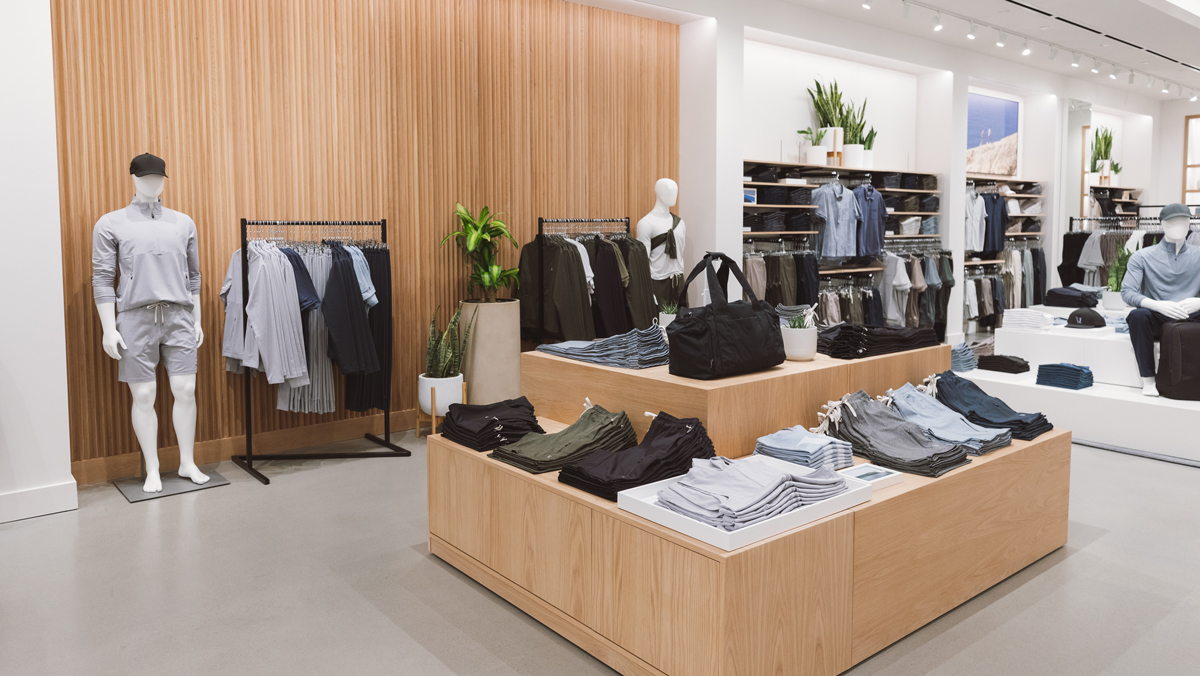
Retail millwork refers to the custom wood elements designed and built for a specific store. This includes functional pieces like cash wraps, service desks, shelving, pedestals, and risers, along with architectural and decorative elements such as feature walls, ceiling baffles and clouds, canopies, wainscoting, paneling, and molding.
Millwork goes beyond standard carpentry. It is a discipline built around brand identity, customer flow, and product presentation, not simply decoration.
Across Agility Retail Group’s project history, millwork shows up in service desks, cash wraps, end-cap displays, department canopies, wall trim, and wainscoting. Each piece is built for a specific store, a specific brand, and a specific merchandising need. For example, a stock cabinet solves a storage problem while a dressing room solves a customer experience problem. A custom millwork piece solves that same problem while also communicating exactly who the brand is.
It helps to place millwork within the larger fixtures category. Millwork is the custom-wood side of a store’s fixture program, while custom store fixtures span additional materials including metal, plastic, glass, and wire.
What Are the Different Types of Retail Millwork?
Retail millwork falls into three broad types: functional casework such as cash wraps, service counters, and built-in cabinetry, custom wood display pieces that showcase product, and architectural or decorative woodwork that shapes a store’s mood. Each is a custom-crafted wood element built for durability, brand integration, and customer flow.
- Functional casework: the custom wood pieces built into a store’s daily operation, including cash wraps, fitting rooms, service and transaction counters, and built-in cabinetry. These are the pieces our Complete Guide to Custom Store Fixtures describes as “millwork-integrated fixtures,” and this is the natural place to describe them as millwork.
- Custom wood display pieces: freestanding wood elements that showcase product, including display tables, nested tables, pedestals, risers, and custom wood bins or endcaps. Standard gondolas are metal and fall outside this category. Only custom wood-built units qualify as millwork.
- Architectural and decorative woodwork: canopies, ceiling baffles and clouds, wall trim, wainscoting, moldings, and decorative millwork that set a store’s mood and tie into its broader décor. Decorative millwork is also a key part of a store’s overall décor, a topic worth its own deeper look down the road.
What Materials Are Retail Millwork Made From?
Retail millwork is built primarily from wood, solid hardwoods like oak and maple, wood veneers, and engineered panels such as MDF and plywood, often finished with durable laminates or solid surface, with metal and glass used as accents. Material choice depends on where a piece sits in the store and what job it needs to do.
Wood is a natural product, and that matters more than it might seem. Compared to materials like steel, wood tends to create a warmer, more inviting environment, which is one reason it remains the foundation of most millwork programs. Dozens of wood species, along with a wide range of stains and finishes, give designers room to create a look that’s distinct to a single brand rather than generic to the category.
Solid hardwoods such as oak, walnut, and maple deliver the highest level of warmth and authenticity, and they’re typically reserved for feature walls, cash wraps, and other high-visibility pieces where premium and heritage brands want the material to speak for itself. Wood veneer and laminate finishes achieve a similar look at a lower cost and weight, with a wider range of finish options, making them well suited to shelving, endcaps, and high-volume multi-store rollouts. Engineered wood panels like MDF and plywood serve as the stable, cost-effective substrate underneath most painted and laminated millwork, since they take paint and laminate well and hold their shape over time. Metal and glass accents round out a millwork piece, adding contrast, lightness, and a more modern edge where a brand calls for it.
Sustainability is increasingly part of the material conversation. FSC-certified wood and reclaimed wood are the recognized options for retailers building sustainability requirements into their fixture specifications, and they’re worth a closer look for any program with those goals. Our guide to sustainable retail millwork covers this in depth.
Agility Retail Group matches these materials to real in-house capability, with world-class wood and plastic manufacturing alongside metal fabrication, so a single partner can execute a millwork program from the hardwood feature wall down to the metal trim around it. For a broader look at how these same material families apply across the full fixtures category, see our guide to retail fixture materials.
Retail Millwork Material Comparison
| Material / Finish | Characteristics | Common Retail Use & Brand Signal |
| Solid hardwood (oak, walnut, maple) | Premium, durable, and warm, with higher cost and longer lead time | Feature walls and cash wraps for premium and heritage brands |
| Wood veneer / laminate | Wood look at lower cost and weight, with a wide finish range | Shelving, endcaps, and high-volume multi-store rollouts |
| Engineered wood (MDF, plywood) | Stable, cost-effective substrate that takes paint and laminate well | Built-in cabinetry carcasses and painted millwork |
| Metal & glass accents, solid surface (plastic) | Adds contrast, lightness, and a modern edge | Display cases and trim for tech-forward and modern brands |
| Finish (stain, paint, matte/gloss) | Sets tone and price-point perception | Matte or raw finishes read casual or sustainable, high-gloss reads premium |
How Millwork Shapes the In-Store Experience
Millwork matters because it does several jobs at once. It reinforces the brand, guides shopper traffic, supports store operations, and holds up under heavy daily use. The four roles below work together, and a well-designed millwork program is built to deliver on all of them at once.
Reinforcing Brand Identity
Your physical store is a three-dimensional marketing asset, and intentional, brand-aligned millwork makes an immediate emotional impact where generic fixtures fade into the background.
The exact wood species chosen, the finish applied, and the dimensions specified all communicate brand ethos before a single sign is read. A rustic, organic warmth built from raw-edge solid wood and matte finishes tells one story. Sleek, modern minimalism built from dark-stained veneer and clean lines tells a different one entirely. Neither is more correct. The right choice depends entirely on what the brand needs the store to say.
Maximizing Space and Functionality
Every inch of a retail footprint counts, and custom millwork solves spatial and operational challenges that off-the-shelf casework can’t, through modular displays, built-in storage, and integrated POS and lighting.
Adjustable, modular displays adapt to seasonal inventory without requiring a full fixture replacement. Built-in storage keeps stockroom clutter out of sight and keeps daily operations running smoothly for store staff. POS systems and lighting can be integrated directly into the architecture of the millwork itself rather than bolted on as an afterthought. A cash wrap is the clearest example. A well-designed solution hides cables and storage, integrates the point-of-sale system cleanly, and still presents a finished, on-brand surface to every customer who walks up to it.
Space planning plays directly into how these pieces get placed on the floor. Our guide to custom millwork for retail space planning covers that process in more detail.
Driving Customer Engagement
Retail millwork drives engagement by turning passive browsing into an immersive, branded experience. Custom display cases, demo counters, and architectural details like feature walls and canopies draw shoppers in, improve product visibility, and guide traffic flow, encouraging longer visits and more purchases.
Millwork influences shopper behavior in three ways. Materials, textures, and finishes communicate brand values on an emotional level. Millwork also serves as the built casework that houses interaction, holding demo kiosks, product-testing stations, and integrated lighting so customers can touch, test, and engage with a product directly, without the technology itself doing the work alone. And purpose-built cash wraps, circular displays, and adjustable millwork shape the floor plan itself, removing friction and leading shoppers toward high-margin or seasonal merchandise.
The effect compounds. A thoughtfully designed store environment tends to keep shoppers browsing longer, and longer dwell time generally translates into more spending per visit.
Ensuring Long-Term Durability and ROI
Retail environments endure heavy foot traffic, constant restocking, and daily handling, and custom millwork is built with heavy-duty hardware and commercial-grade materials engineered to last, yielding a higher return than mass-produced furniture that needs frequent replacement.
Commercial-grade construction and premium materials cost more upfront, but they hold up to years of daily use in a way that consumer-grade furniture never will. Solid surface counters and hardwood veneers can also be sanded and refinished in the field rather than replaced outright when damage occurs. Across the lifespan of a store, that combination of durability and repairability is what turns millwork from a design expense into a long-term investment.
What to Know Before Commissioning Custom Millwork
Commissioning custom millwork means balancing brand aesthetic, budget, and durability. The essentials are clear specifications, the right material and finish grades, detailed shop drawings, on-site surveys, and realistic lead-time planning, best handled together with an experienced manufacturing partner.
- Material selection and durability: choosing the right substrate and finish for high-traffic retail matters more than it might seem, whether that’s a stable engineered panel or architectural-grade plywood for a painted or veneered piece, or a durable finish and heavy-duty hardware for a cash wrap or shelving unit that will see daily use for years.
- Shop drawings and prototyping: never skip the shop-drawing phase. A capable millworker provides CAD blueprints for approval before any wood is cut, and for large rollouts, a physical prototype tests fit, finish, and ergonomics before the full fleet goes into production. Agility Retail Group’s in-house design and engineering team supports rapid prototyping measured in days, not weeks.
- Site conditions and logistics: a site survey measures as-built dimensions on-site, since walls are rarely plumb in the real world. Controlled humidity and temperature protect finished pieces before installation, and confirming that finished pieces fit through doors, elevators, and loading docks avoids an expensive surprise on installation day. Agility Retail Group’s nationwide installation capability supports this step at scale.
- Lead times: lead times matter, and early planning is the single biggest factor in protecting a launch date. Our guide to custom retail millwork lead times covers specifics on timeline planning.
Partner With Agility Retail Group on Your Millwork Program
Millwork shapes brand, traffic, operations, and adaptability all at once, and getting it wrong is expensive to fix across a fleet of stores.
Agility Retail Group brings custom design and engineering, in-house manufacturing, a national footprint, and decades of multi-location retail experience to every millwork program. From the first sketch of a cash wrap to the final installed store, one partner manages the entire process, reducing the handoffs and risk that come with managing multiple vendors across a rollout.
Ready to build a store environment where every custom detail works as hard as it looks?
Talk to Agility Retail Group about a custom millwork program for your stores.
Connect with our team to design a millwork program built to perform across every location in your fleet.
Frequently Asked Questions
How much does custom retail millwork cost?
Custom millwork pricing depends on scale, materials, and design complexity, which makes a firm number impossible without a project-specific quote. Industry pricing for architectural millwork commonly ranges from roughly $50 to $500 or more per linear foot depending on material grade, finish, and hardware. A qualified manufacturing partner can turn your specific requirements into an accurate estimate.
What’s the difference between millwork and casework?
Casework is modular, factory-made cabinetry built to standard box shapes and sizes. Millwork is custom, one-of-a-kind woodwork, including trim, moldings, feature walls, and bespoke built-ins crafted to fit one specific space. A store’s cash wrap or service counter is typically millwork because it’s custom-built to the brand and floor plan, while casework describes the standardized cabinet boxes that may sit inside it.
What should a retail store designer look for in a millwork partner?
A retail store designer should look for a partner that offers early, collaborative engineering, translates design intent into accurate shop drawings, and maintains material and finish consistency across batches, which matters most on multi-location rollouts. The partner should also build for durability in high-traffic spaces and manage logistics through on-time installation, the criteria that separate a true manufacturing partner from a vendor.
Can millwork be used across multiple store locations?
Yes. National brands and retail chains rely on standardized custom millwork, cash wraps, counters, and shelving built to the same specifications to keep the look, feel, and functionality consistent from store to store. A single manufacturing partner producing across multiple facilities helps maintain that consistency at scale, even across a rollout spanning hundreds of locations.