
Key Takeaways
- Custom millwork timelines scale with scope: a single fixture can ship in days, a single-store package generally runs 4-6 weeks, and a multi-location rollout takes longer.
- The process runs through five sequential phases, and the clock effectively starts at shop-drawing approval, not at order placement.
- Lead times are shaped by design and engineering approvals, material sourcing, finishing requirements, production capacity, and rollout scale.
- Planning backward from the opening date and engaging a millwork partner early, during the design phase, is what prevents most delays.
- Multi-location rollouts run as staggered, phased production rather than a simple multiple of a single store’s timeline.
For any retailer working against a store opening, remodel, or rollout date, the millwork timeline is one of the biggest variables standing between now and grand opening. A missed lead time doesn’t just delay one fixture, it delays the whole launch. Knowing what the process actually involves, and where the real risk to a deadline sits, is what separates a program that opens on schedule from one that spends its final weeks in recovery mode.
Table of Contents
- How Long Does Custom Retail Millwork Take?
- What Are the Steps in the Custom Millwork Process?
- What Affects Millwork Lead Times?
- How to Plan Around Lead Times and Avoid Delays
- Plan Your Millwork Timeline With Agility Retail Group
- Frequently Asked Questions
How Long Does Custom Retail Millwork Take?
There’s no single answer, because custom millwork is built to a specific brand and space rather than pulled off a shelf. As a rough guide, a single fixture or cash wrap can be fabricated in a couple of weeks, a single-store package generally runs 4-6 weeks, and a full build-out or multi-location rollout takes longer. The real answer depends on scope, materials, finishes, and site readiness.
Custom millwork is built to spec, not stocked in a warehouse, so the timeline scales directly with complexity and volume. A painted MDF cash wrap and a solid-oak feature wall with a hand-rubbed finish are both millwork, but they sit at very different points on the calendar.
Quantity also plays a key role in timing. Larger quantities are typically more efficient to produce in batches, while smaller quantities may require more frequent setup and production changes, so the number of pieces can affect the overall timeline.
The breakdown below walks through the five phases of the process so you can see where that time actually goes.
Custom Millwork Phase Timeline
| Phase | What Happens | Typical Range |
| Site survey & kickoff | Review plans and brand specs, measure exact site dimensions on-site | ~1 to 2 weeks |
| Shop drawings & engineering | 3D CAD drawings of every dimension, material, and hardware detail, followed by client review and sign-off | ~1 to 3 weeks |
| Prototyping | Build and test a physical prototype to confirm fit, finish, and ergonomics before full production begins | ~2 weeks |
| Material procurement | Order substrates, laminates, solid surface, and hardware, long-lead items set the critical path | ~1 to 3 weeks |
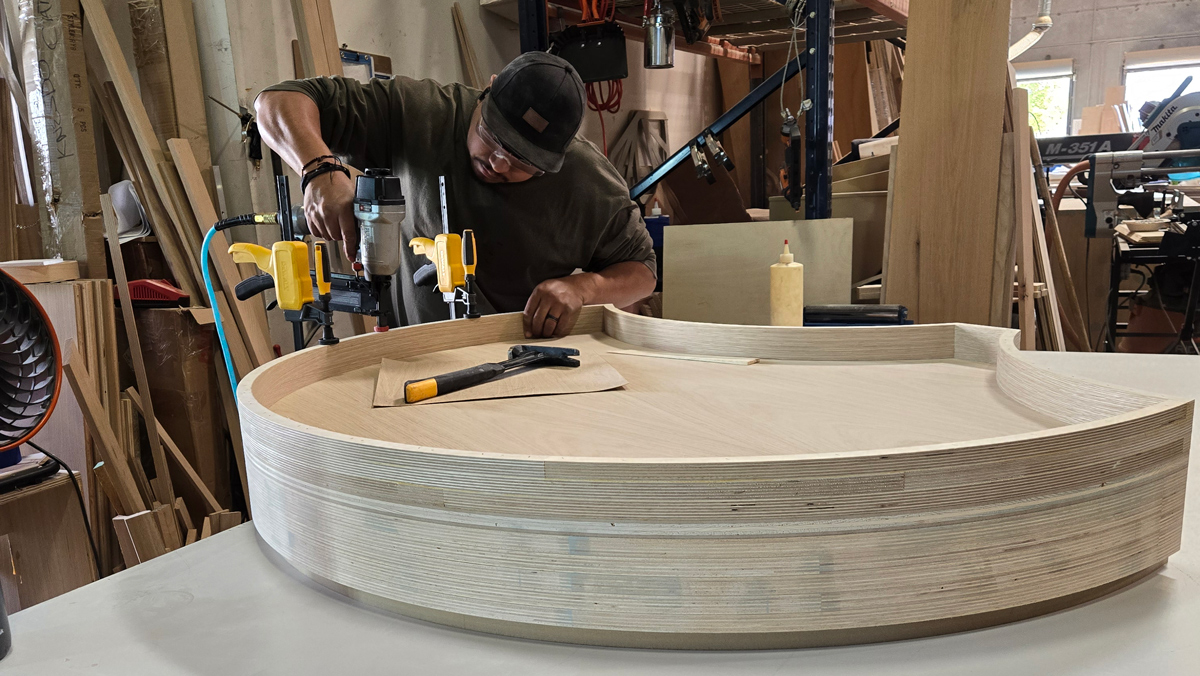
| Fabrication & finishing | CNC cutting, joinery, and assembly, dry-fit to confirm structural integrity, then finishing | ~3 to 6 weeks, depending on scope |
| Delivery & installation | Ship, install, connect plug-and-play lighting, final QA walkthrough | ~a few days to 1 week |
What Are the Steps in the Custom Retail Millwork Process?
The custom millwork process runs through five sequential steps: design and engineering, shop drawings and approvals, material procurement, fabrication and finishing, and on-site installation. Each step carries its own timeline, and the clock effectively starts when shop drawings are approved, not when the order is placed.
During design and engineering, a millworker translates concepts into a piece built to perform in a real retail environment, engineering in details like POS wire management and integrated LED lighting long before a single board is cut. From there, the process moves into shop drawings, material procurement, fabrication and finishing, and finally on-site installation, which is typically timed to late-stage construction, during or right after flooring goes in.
One important point in the timeline is that fabrication can’t begin until shop drawings are reviewed and approved. Everything before that point is design and revision, while everything after it is production and delivery. Once drawings are approved, production can move forward according to the established schedule.
What Affects Retail Millwork Lead Times?
Millwork lead times are driven by a handful of factors: design and engineering approvals, material sourcing, finishing requirements, production capacity, and rollout scale. Two projects of similar size can land on very different timelines once these variables are factored in, which is why a single universal number rarely holds up.
- Design and engineering approvals: translating concepts into approved shop drawings drives everything downstream. Revisions, value-engineering cycles, and field verification happen upfront, and the clock doesn’t really start until drawings are signed off.
- Material sourcing: standard engineered panels like MDF and plywood move fast. Solid hardwoods, exotic species, and custom-matched veneers are the long-lead items that most often set the critical path for a millwork program.
- Finishing requirements: custom stains, multi-step lacquers, and high-gloss finishes need curing time that can’t be rushed, and they carry rework risk that can extend the window if a finish doesn’t pass inspection the first time.
- Production capacity and seasonality: a manufacturer’s current queue and peak periods, like pre-holiday retail resets, affect where a build lands in line. Agility Retail Group’s multi-facility national footprint helps absorb that seasonal pressure rather than pass it on to a single build.
- Rollout scale: multi-location programs run as phased manufacturing with coordinated freight rather than one continuous build. Our guide to multi-store fixture rollouts covers how that phased approach comes together at scale.
A manufacturer with in-house design and engineering and multiple facilities can compress several of these factors at once, through faster drawings, less dependency on a single shop’s queue, and better-coordinated sourcing.
How to Plan Around Lead Times and Avoid Delays
The key to hitting your date is planning backward from your opening and engaging your millwork partner early. Lock design and shop drawings quickly, pre-order long-lead materials, and coordinate site readiness so installation isn’t waiting on other trades. Early alignment prevents most of the delays that show up later.
- Work backward from the opening date: set the install week first, then map the phases back to know when drawings must be approved.
- Move fast on shop-drawing approval: the clock starts at sign-off, and reviews typically take a couple of revision rounds, so fast-track internal approvals wherever possible.
- Require on-site field verification before drawings are finalized, so nothing has to be re-cut later because of a bad measurement.
- Pre-order long-lead materials during the drawing phase, not after drawings are signed off.
- Coordinate adjacent trades, including flooring, electrical, and blocking, so they’re finished before millwork arrives, and build in a few days for punch-list touch-ups.
- Confirm storage or phased delivery if the site isn’t ready, so finished pieces aren’t shipped too early or too late.
This planning sequence is what our pillar guide to the role of millwork in retail store design points to when it talks about commissioning a program.
Plan Your Millwork Timeline with Agility Retail Group
On a store opening or rollout, a missed millwork deadline delays the whole launch, not just one fixture. The fix is engaging an experienced partner early, before design is finalized rather than after.
Agility Retail Group is built for deadline-driven work, with in-house design and engineering, rapid prototyping, multiple domestic manufacturing facilities, and nationwide installation. Those capabilities are what keep a timeline predictable, whether the project is a single store or a national rollout.
Have a store opening or rollout on the calendar?
Talk to Agility Retail Group about your millwork timeline. Connect with our team to build a plan that keeps your dates on track.
Frequently Asked Questions
How long does custom retail millwork take?
Timelines scale with scope. A single fixture will typically take a couple of weeks, while a single-store package is more likely to run 4–6 weeks, with multi-location rollouts taking longer still. The real drivers are complexity, materials, finishes, quantity, and site readiness, and the clock effectively starts once shop drawings are approved, not when the order is placed.
How far in advance should I order custom millwork for a store opening?
Plan backward from the opening date and engage a millwork partner as early as the design phase, not after concepts are finalized. Shop-drawing approval and long-lead materials, not fabrication speed alone, are what determine how early a program needs to start moving.
What causes custom millwork delays?
The most common culprits are slow shop-drawing approvals, late material decisions, long-lead specialty materials, custom finishes that need curing time, and adjacent trades not being finished before install. Most of these are preventable with early planning rather than inherent to the millwork process itself.
Can custom millwork be rushed or expedited?
Some steps, like finish curing and drawing approvals, can’t be safely rushed without risking quality. What can move faster is everything around them: an experienced partner with in-house engineering and multiple facilities can compress drawings, sourcing, and production time when a program engages early enough to take advantage of it.
Do lead times change for multi-location rollouts?
Rollouts run as staggered, phased production with delivery matched to each store’s individual schedule, so they don’t simply multiply a single store’s timeline. A manufacturer with multiple domestic facilities can open locations on a rolling basis rather than waiting for one batch to finish before the next begins.