
Key Takeaways
- Leading retailers are prioritizing fixture programs that combine modularity, sustainability, customization, technology integration, and brand storytelling to future-proof retail environments.
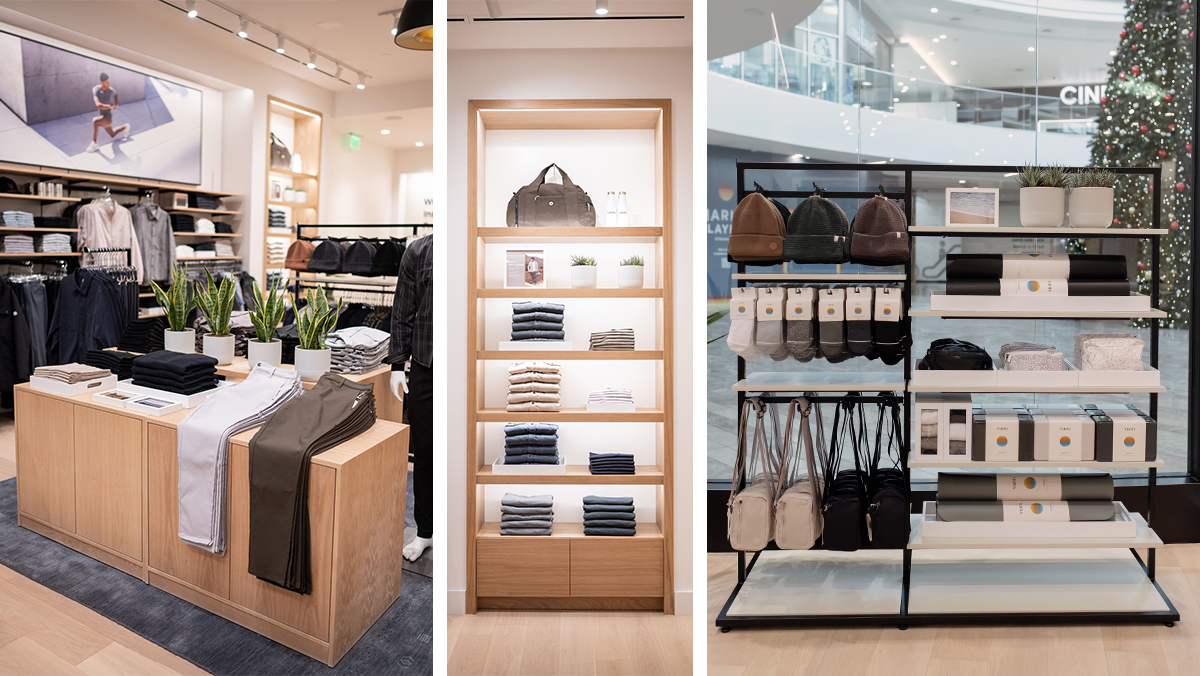
- Natural materials and warm finishes such as wood tones, matte surfaces, and blackened metal are replacing sterile retail aesthetics to create more welcoming and authentic shopping experiences.
- Modular fixtures with adjustable components and mobile designs help retailers adapt quickly to seasonal resets, promotional changes, and evolving store layouts.
- Sustainability is now a core procurement requirement, with retailers increasingly specifying recycled materials, bamboo, FSC-certified wood, and long-lasting fixture designs.
- Retailers are using fixtures as storytelling tools by integrating technology, open layouts, lighting, and custom materials to strengthen emotional connections and improve customer engagement.
For a store planner or store design director, keeping pace with store fixture trends is a critical operational requirement. Custom store fixtures are long-cycle investments. Unlike seasonal apparel or digital marketing assets, a fixture program determined and designed today will define the store environment that shoppers experience for the next five to ten years.
These assets are typically designed to last half a decade or longer. As such, the stakes of the initial specification are incredibly high. A retailer who specs fixtures based on what was industry standard three years ago risks opening stores that look dated on their very first day of operation.
Getting the direction right at the specification stage matters more than it does in almost any other retail decision. The shifts currently reshaping the industry are operational and brand-driven transformations showing up consistently across large-scale retail programs. Each of these shifts carries heavy implications for material selection, manufacturing approaches, and the fundamental way fixture programs are planned and executed.
This guide explores seven consistent priorities: natural materials, modularity, sustainability, customization, low-profile layouts, technology integration, and environmental storytelling. Note that the numbering here is organizational and does not represent a ranking, as all seven are showing up with equal frequency across the retail landscape.
Table of Contents
- Natural Materials and Warm Finishes are Reshaping Fixture Design
- Modular Fixtures are Now a Retail Standard
- Sustainability is Changing Fixture Programs
- Custom Fixtures are Replacing Generic Solutions
- Low-Profile Fixtures are Reshaping the Store Floor
- Technology is Being Built into Store Fixtures
- Storytelling has Become a Fixture Design Imperative
1. Natural Materials and Warm Finishes are Reshaping Fixture Design
The trend toward natural materials and warm finishes has significant staying power because it appeals to deep-seated shopper values of quality, authenticity, and care. These materials have successfully migrated from the exclusive world of boutique retail into mainstream grocery, specialty, and wellness environments. This shift is driven as much by shopper psychology as it is by visual design. Environments featuring wood tones and matte surfaces feel intentional and considered, creating a welcoming space that feels less transactional and more human.
In practical application, wood and engineered wood have become the dominant materials for fixture specifications in grocery perimeters, specialty food, and health-focused brands. While solid wood remains the gold standard for communicating raw authenticity, professional fixture programs often utilize wood-look laminate finishes as a strategic value engineering decision. These laminates deliver the same visual warmth as natural wood but offer far superior durability and cleanability in high-traffic retail zones.
Furthermore, retailers are moving away from the clinical, sterile white finishes that defined the previous decade. Instead, they are embracing warm neutral color palettes, often accented with blackened metal to create a more sophisticated, grounded environment. Our Store Fixture Material Guide has all the information you need for choosing the right components.
2. Modular Fixtures are Now a Retail Standard
Modularity has shifted from a nice-to-have feature to a core procurement priority. Because retail environments live in a state of constant flux while fixtures are meant to last for years, a non-adaptable fixture creates massive downstream costs every time a store layout needs to change. Today’s retailers are running more promotional cycles, seasonal resets, and concept tests than ever before. A fixture environment that requires a professional contractor to reconfigure is a fixture environment that effectively slows the business down.
Modular systems, including fixtures on wheels, adjustable shelving, and interchangeable components, empower store teams to adapt in real time. This modularity manifests differently across retail verticals:
- Specialty Retail: Freestanding floor units mounted on casters allow for rapid repositioning for new seasons without any specialized tools.
- Grocery: Gondola systems now feature highly adjustable shelf heights and interchangeable end components to support diverse product mixes.
- QSR (Quick Service Restaurants): Counter systems are being designed for reconfiguration to support menu changes without requiring a full, expensive millwork replacement.
A prominent real-world example of this is the fixture program for Vuori. Every center store fixture manufactured for their locations is mounted on wheels, allowing the retailer to refresh their floor spaces rapidly and independently of outside contractors. Additionally, modularity supports sustainability by ensuring that fixtures can be reconfigured for new uses rather than being discarded at the end of a single store cycle.
3. Sustainability is Changing Fixture Programs
Sustainability has undergone a fundamental shift from a brand positioning exercise to a hard procurement requirement. Retailers are now requiring manufacturers to provide documented material sourcing, recycled content specifications, and designs that fundamentally extend the useful life of the asset. A truly sustainable fixture program must check three boxes: material selection, design for longevity, and end-of-life considerations.
Material selection now includes a wide range of proven, sustainable options such as FSC-certified engineered wood, bamboo, reclaimed wood, recycled acrylic, and recycled metal. Agility Retail has successfully executed several programs at scale using these materials, including:
- Wayfair: Utilizing 100 percent post-consumer recycled waterproof wood.
- Guayaki Yerba Mate: Integrating recycled acrylic components.
- Other Projects: Incorporating bamboo and beetle kill pine into large-scale rollouts.
Beyond materials, design for longevity is the most sustainable choice a retailer can make. The fixture that does not need to be replaced is the one with the smallest environmental footprint. By prioritizing modularity and field repairability, retailers can significantly extend the life of their fixture assets.
4. Custom Fixtures are Replacing Generic Solutions
The drive toward custom fixtures is not being fueled by aesthetics alone, but by the necessity of competitive differentiation. In a retail landscape where online platforms offer infinite choice, the physical store environment is one of the few levers a brand has that cannot be replicated digitally. A store filled with generic stock fixtures offers no differentiation and signals to the shopper that the brand has not invested in their experience.
Custom fixtures are the primary way a brand communicates its identity — whether that identity is premium or accessible, curated or abundant — before a customer ever touches a product or reads a single line of copy.
While customization was once the domain of luxury retail, it has now expanded into mainstream grocery, QSR, and even off-price environments. Retailers across every vertical are beginning to recognize that the physical store is a vital brand touchpoint and a medium for engagement, not just a utilitarian distribution channel. Our Custom Store Fixture Guide will help you make the right choices.
5. Low-Profile Fixtures are Reshaping the Store Floor
The trend toward low-profile fixtures is rooted in the logic of the shopper experience. A store where a customer can see across departments feels navigable, inviting, and safe, whereas a store blocked by tall gondola shelving quickly feels like a frustrating maze. This layout decision is as much about store experience as it is about visual merchandising.
The shift is driven by three factors:
- Shopper Preference: Consumers gravitate toward open, easily navigable environments.
- Natural Supervision: Lower fixtures improve line-of-sight for store staff, aiding in loss prevention.
- Boutique Influence: The open formats of specialty retail are increasingly influencing mainstream grocery and mass-market design.
Low-profile does not mean low-capacity. The engineering challenge is to achieve lower fixture heights while maintaining the product density required for profitability.
Well-engineered low-profile units can hold comparable SKU counts to their taller counterparts while making the store feel lighter and more open. This approach changes the fixture mix as sightlines open up, and perimeter millwork and branded endcap systems become more prominent and visible from more angles.
Retailers are shifting away from a laser focus on sales per square foot in favor of creating the right experience. As composer Claude Debussy famously noted, “The beauty of music lies in the space between the notes”. By creating the right space, retailers increase dwell time, a metric highly correlated with increased revenue and larger shopping baskets.
6. Technology is Being Built into Store Fixtures
Retailers are reimagining fixtures as active retail infrastructure rather than passive product holders. A fixture equipped with integrated lighting, digital displays, or sensors contributes to the operational data flow and the brand story.
Technology integration exists on a spectrum:
- Integrated LED Lighting: This is the most accessible entry point, with fixtures designed to highlight specific products or set a specific zone’s mood without requiring separate electrical installations.
- Digital Signage: Screens integrated directly into the fixture structure can display dynamic content, pricing, and looping video to drive engagement.
- Smart Sensors: Sensors embedded in shelving can track inventory levels, monitor temperature, or collect data on customer engagement.
- Electronic Shelf Tags: Though still in early adoption in the U.S., these are poised for growth as they allow retailers to lift revenue by dynamically changing pricing based on the time of day or day of the week.
A critical consideration for technology is the lifecycle mismatch. Tech components often need replacement much sooner than the fixture structure. Fixtures must be designed from the start for technology serviceability and updates to avoid requiring a full fixture replacement every few years.
7. Storytelling has Become a Fixture Design Imperative
In the past, fixture programs were measured by product capacity, traffic flow, and cost. While these remain important, they no longer tell the whole story. Leading retailers now design fixtures that communicate the brand’s identity before a customer reads a word of copy. This shift has turned storytelling into a categorical requirement rather than a differentiator.
Storytelling at the fixture level is about environmental communication. The materials, proportions, and spatial arrangement send immediate signals to the shopper. A reclaimed wood endcap in a grocery perimeter tells a story of provenance and fresh sourcing, while a matte black metal frame in an apparel store communicates a completely different, modern register. The fixture is the very first brand touchpoint in the store, and it is performing narrative work regardless of whether it was intentionally designed to do so.
Historically, storytelling lived in advertising and packaging, while the store was treated as a distribution hub. That framing has shifted. Retailers who ignore the narrative power of their fixtures are ceding a significant competitive advantage. In practice, this shows up in design choices that might otherwise seem purely aesthetic:
- Choosing real wood grain over laminate to convey authenticity.
- Prioritizing open sightlines over maximizing gondola height.
- Integrating warm lighting into the fixture itself rather than relying on overhead fluorescents.
When these decisions are made coherently, the store tells a compelling story that sticks with the customer. The operational case for this is solid: shoppers who feel an emotional connection to a store environment dwell longer, and increased dwell time is a primary predictor of larger basket sizes and higher return visit rates. In the modern era, a coherent storytelling environment is not a luxury, but a central revenue strategy.
Ready to future-proof your retail environment?
Today’s leading retailers are investing in fixture programs that are modular, brand-driven, technology-ready, and built for long-term flexibility. Agility Retail helps brands translate emerging retail trends into scalable fixture solutions that improve the customer experience and support operational growth.
Talk with our team about designing a fixture program built for where retail is headed next.